
Al-Manara Daily
Why Faster GHz Didn’t Mean Faster for Many Buyers This Week
Retail returns and repair counters highlight how IPC, power limits and heat can decide performance—sometimes within minutes of turning a PC on.
TECHNOLOGY
DUBAI — Thursday, June 13, 2026
By Rana Al-Harbi
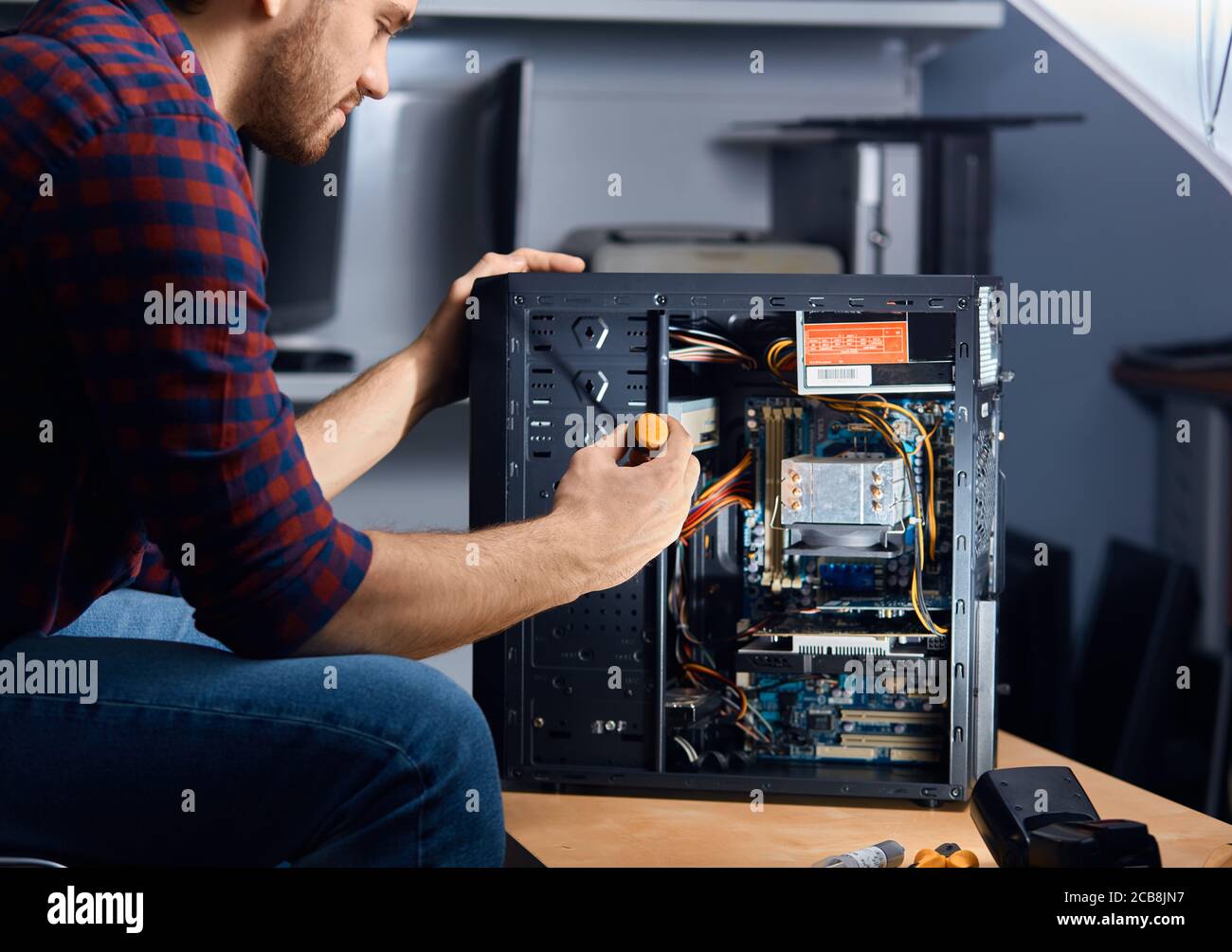
Shoppers who upgraded to “higher GHz” processors expecting instant gains in games and video work were back at electronics retailers across Dubai this week, describing stutters, noisy fans and performance that dipped after a short burst—problems technicians said often come down to instructions-per-cycle, power limits and heat, not the advertised clock speed alone.
Sales staff at several computer shops in Al Fahidi and Deira said the same question kept coming: Why does a new chip labeled 5.6 GHz feel only a little faster—or sometimes worse—than an older one?
At a service desk inside a Mall of the Emirates electronics chain, technician Fadi Nasser pointed to a customer’s small-form-factor PC on a bench, its side panel removed and a compact cooler running at full speed.
“On paper it boosts high for a few seconds,” Nasser said, watching a monitoring window climb and then fall. “But once it hits its power ceiling and the heat builds, the clock drops. If the core can’t do as much work each cycle, the big number doesn’t save you.”
GHz vs. IPC: A higher speedometer isn’t always a faster car
Clock speed, measured in gigahertz, is how many cycles per second a processor runs. IPC—instructions per cycle—reflects how much work it can accomplish in each cycle.
That distinction showed up in a comparison posted this week by the local esports café “Sandstorm Arena,” which swapped two similarly priced desktops between stations to test customer complaints. One system ran a processor that advertised a higher boost frequency; the other used a chip with lower peak GHz but a newer core design.
“In our shooter titles, the lower-GHz machine held steadier frame times,” said café manager Laila Al-Suwaidi, referring to the consistency that players feel as smoothness. “The other one would spike fast, then dip when the room got busy and warm.”
A parts reseller in Bur Dubai, who asked not to be named to avoid conflicts with brands he carries, said customers often mistake the printed frequency for “an all-day promise.”
“Two chips can both say 5-plus GHz,” he said. “But one can retire more instructions each tick, and one can’t. That’s why people see a difference in heavy games or in exporting video.”
Power and heat: Boost is temporary; throttling is the bill that comes due
Modern processors routinely run above their base frequency using boost algorithms that increase voltage and clock speed when there is thermal and electrical headroom.
But the same systems also enforce limits. When the processor reaches a temperature target or a power cap set by the manufacturer—or by the laptop’s design—it reduces frequency to stay within safe operating bounds. That reduction is commonly called throttling.
At a repair kiosk near Union Station, technician Sara Qasem said she sees throttling complaints most often in thin laptops and compact desktops.
“A customer will say, ‘It was fast for the first minute and then it slowed down,’” Qasem said. “That’s boost ending. The machine is protecting itself.”
Store logs reviewed by The Daily showed a spike in returns tied to “overheating/noise” after recent sales of small prebuilt gaming PCs. A manager at one chain said many units were configured with aggressive boost settings that looked good in short benchmark runs but were harder to sustain during longer gaming sessions.
Real-world examples: Games vs. browsing vs. video rendering
The differences were evident in demonstrations at several shops that let buyers test systems before purchase.
Browsing and office work: In a quiet showroom in Jumeirah, a salesperson opened dozens of browser tabs, launched messaging apps and switched between spreadsheets. The higher-GHz machine felt snappy, but the lower-GHz, higher-efficiency machine appeared equally responsive.
“Most people won’t notice a 5.6 versus 5.2 number here,” the salesperson said, tapping between windows. “Storage speed and memory can matter more than peak clocks for this.”
Gaming: At Sandstorm Arena, staff showed a popular open-world game that stresses both CPU and GPU. The higher-boost system initially posted higher frame rates while the cooler was still catching up. After 15 minutes, the average stabilized lower than expected as temperatures rose and the CPU reduced its frequency to maintain its thermal target.
“Players don’t care about a spike at the start,” Al-Suwaidi said. “They care about the dip during a fight.”
Video rendering: In a back room at a media studio in Dubai Media City, editor Omar Haddad ran a 20-minute 4K export on two workstations. The machine with the bigger advertised boost finished fast in the first few minutes of the encode, then slowed as the fans hit their limit and the processor settled into a lower sustained power state.
“The other workstation didn’t peak as high,” Haddad said, “but it held a steady pace for the whole export. Over the full render, it caught up.”
“Common misconceptions” heard at the counter
Technicians and sales staff said the same misunderstandings repeat daily.
-
“Higher GHz always means the best performance.”
At one retailer, a customer insisted on the highest boost number available for a budget build, then returned to complain about game stutter. Staff pointed to the chip’s lower sustained power limit and the case’s restricted airflow. -
“Heat only affects lifespan, not speed.”
Qasem said she routinely shows customers how performance changes in real time as temperature rises. “It’s immediate,” she said. “The system will slow itself down to manage heat.” -
“Boost speed is what I’ll get all the time.”
A laptop buyer at a Deira shop tested a thin model on battery and saw clocks drop under load. The salesperson explained that many machines reduce power draw on battery and may not sustain top boost without the charger. -
“Cooling is just about noise.”
Nasser said better cooling can translate into higher sustained clocks, not just quieter operation. He gestured to a tower PC with a larger heatsink and steadier readings during a stress test.
What shoppers are doing differently
Several retailers said they are changing how they pitch upgrades, emphasizing sustained performance and cooling rather than a single frequency figure.
One chain said it now prints a small card next to display models listing typical workloads—“esports titles,” “open-world games,” “4K export”—with notes about case airflow and power limits.
“We still get the GHz question,” a store manager said. “But once you show them the same system after 20 minutes of gaming, they understand why the highest number isn’t the whole story.”