
The Harbor City Ledger
Lab Report Mix-Up Prompts District to Push Metric Prefix Clarity
A chemistry practical derailed by mismatched magnitudes is being used as a lesson in choosing meters vs centimeters, grams vs milligrams — and writing symbols correctly.
SCIENCE & EDUCATION
HARBOR CITY — Feb. 1, 2026
By Rina Delgado
A routine high school chemistry practical ended in confusion this week after student groups recorded the same measurements using different metric prefixes, prompting Harbor City Public Schools to issue new guidance on choosing convenient magnitudes and writing unit symbols with care.
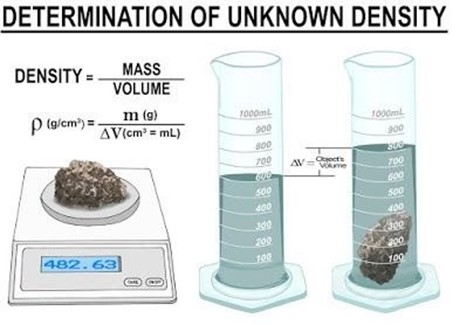
Teachers at Harbor City High said the incident began during a density lab in which students measured the mass of a metal sample and the volume of displaced water in a graduated cylinder. The lab itself was ordinary; the reporting was not.
“Half the room wrote the sample as 0.006 kg, the other half wrote 6 g, and one group wrote 6000 mg,” chemistry teacher Alina Marr said after class Friday, holding a stack of lab sheets marked with red ink. “All three are correct in value. But when you’re comparing groups quickly, it becomes a mess.”
The confusion deepened when some students rounded aggressively to fit their chosen units, Marr said. “A number that looks neat in one unit can look like meaningless zeros in another,” she said. “That’s where interpretation gets lost.”
The compact prefix table now taped to lab benches
In response, the science department distributed a one-page reference that includes a short prefix table. Copies were taped to balances, pipette stations and lab notebooks.
| Prefix | Symbol | Meaning | Multiply by |
|---|---|---|---|
| kilo | k | thousand | 10³ |
| centi | c | hundredth | 10⁻² |
| milli | m | thousandth | 10⁻³ |
| micro | μ | millionth | 10⁻⁶ |
Marr said the goal is not to force a single “correct” unit, but to push students toward magnitudes that make results easy to read and compare.
Choosing units to keep numbers readable
District science coordinator Priya Nand told staff in an email that measurements should generally be reported so the numeric value lands in a “comfortable range,” typically between about 1 and 1,000.
“When the number becomes 0.000004, people stop seeing the measurement and start seeing punctuation,” Nand said in an interview. “And when it becomes 4,000,000, it invites copying mistakes.”
In the same message, Nand encouraged teachers to emphasize consistency within a table of results.
“If a class is comparing cylinder readings, everyone using mL keeps the eye on the pattern,” she said. “If some are using L and some are using μL, the pattern is harder to see—even when no one is technically wrong.”
Chemistry-flavored examples from the lab
Students in Marr’s class said the guidance would have helped during the density practical.
“We were trying to get a clean number, so we wrote 0.006 kilograms,” junior Mateo Lin said. “But then we kept writing volumes in mL, and it didn’t match up with what other groups were doing.”
Marr later rewrote several examples on the board, using the same measurement expressed in different prefixes to show how reporting choices change readability.
- Mass of a sample: A small metal pellet measured on the balance at 6.00 g. Marr noted it could also be written as 6000 mg or 0.00600 kg, but the grams version lined up best with the scale’s typical range and the class’s data table.
- Volume in a graduated cylinder: A displacement reading changed from 25.0 mL to 31.2 mL after adding the pellet. Marr said writing the change as 6.2 mL helped students focus on the quantity needed for density, while writing it as 0.0062 L tended to invite rounding and transcription slips.
- Density comparison: When groups reported density, some wrote values like 7.8 g/mL, others wrote 7.8 g/cm³. Marr said both can be valid in context, but mixing them in the same results table forced classmates to pause and convert before they could compare.
Senior lab assistant Talia Green said she saw the reporting differences snowball. “One group wrote 0.006 kg and then divided by 0.0062 L, and another wrote 6 g divided by 6.2 mL,” she said. “They ended up with numbers that looked totally different, and they argued about who was wrong.”
Symbols and case sensitivity: where small letters cause big problems
The new handout also warns students that unit symbols are not interchangeable and that capitalization carries meaning.
Marr said she regularly sees m (meter) confused with M (a common chemistry symbol for molar concentration), and μ mistaken for m when students write quickly.
“A lowercase m is not a sloppy uppercase M,” Marr told her class. “If you write M when you mean m, you just changed the sentence.”
Nand said the department is also standardizing how students write liters in lab reports when that unit appears. “We’re encouraging an uppercase L so it isn’t confused with the number 1,” she said.
When poor unit choices obscure the story in the data
Administrators said no grades will be changed from the lab, but teachers will require a short revision in which students present their measurements using a consistent set of prefixes and justify why they chose them.
Principal Dana Hsu said the point is to keep focus on chemistry rather than formatting disputes.
“A good lab report should let someone else immediately see what you saw,” Hsu said. “If the unit choices hide the trend, the science gets buried.”
Marr said the lesson has already altered how students discuss results at their benches.
“Now they ask, ‘What unit makes this easy to compare?’ before they write anything down,” she said. “That one question prevents a lot of confusion.”