
The Harbor City Chronicle
City Hospital’s ‘Body-as-a-City’ Campaign Turns Drug Safety Lessons Into Street Maps
A pharmacy team’s plain-language analogies about absorption, distribution, metabolism and excretion are reshaping how clinicians explain why the same dose can act differently from one patient to the next.
HEALTH & SCIENCE
HARBOR CITY — Feb. 1, 2026
By Lena Morrell, Staff Writer
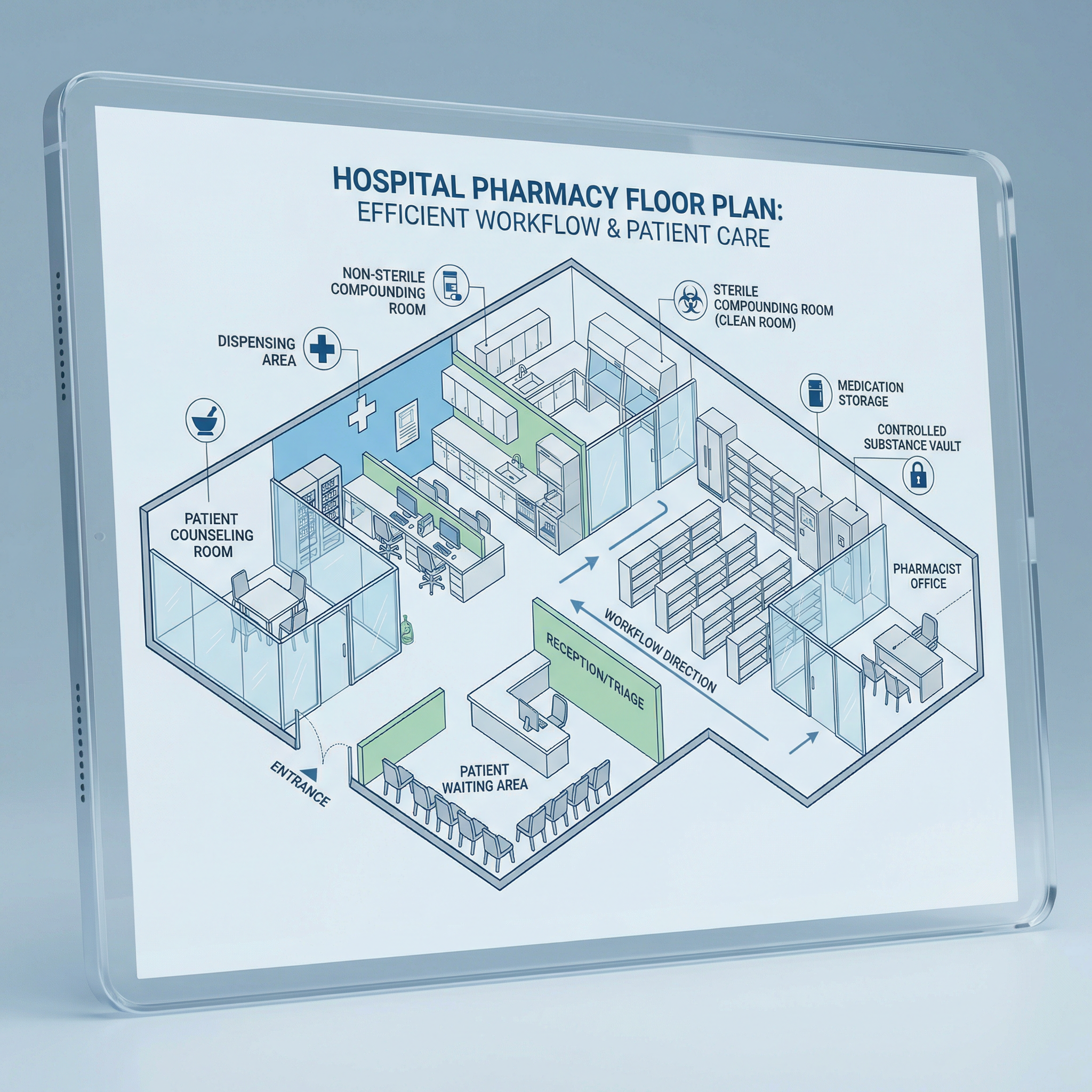
On a Tuesday morning in Harbor City General’s outpatient atrium, a crowd formed around a poster that looked more like a transit map than a medical handout: arrows pointing through “gates,” “neighborhoods,” a “processing plant,” and “exit ramps,” all labeled with four letters — A, D, M and E.
Hospital pharmacists said the display is part of a new education push aimed at patients and newly hired clinicians, using a single analogy — the body as a city — to explain why medication “exposure,” the amount of drug present in the body over time, can rise or fall even when the label dose stays the same.
“People think the pill is the story,” said Dr. Amira Sato, the hospital’s director of clinical pharmacy. “But the trip the pill takes is the story.”
The body as a city: four stops that shape exposure
Staff members guided visitors through the “city” with short, text-only “visuals” printed on placards.
1) Absorption: getting through the city gates
A poster showed a simple description: A gate at the city edge with a line of cars; a security guard waves some through and turns others away.
That gate, pharmacists told attendees, is how a drug gets from the outside world into the bloodstream.
Some “cars” move easily, Sato said — a liquid medicine on an empty stomach, for example. Others queue up or stall: a tablet taken with a heavy meal, or a drug that binds to minerals in an antacid.
“Same pill, different morning,” she said. “If fewer cars get through the gate, the city sees a lower concentration over time.”
2) Distribution: neighborhoods and who gets the deliveries
A second placard described: Delivery trucks branching from a central highway into different neighborhoods — downtown, waterfront, industrial district.
That’s distribution, explained ICU pharmacist Marco Ellery — where the drug goes once it enters the bloodstream.
“Some neighborhoods are easy to reach; others have tight checkpoints,” Ellery said, pointing to a labeled “brain district” with a guarded bridge. “And some drugs ‘park’ in certain areas longer — like warehouses holding shipments.”
Visitors were told that changes in body fat, fluid status, and protein levels can alter how widely the “delivery trucks” spread out, affecting how much drug remains in the “central highway” where it can reach its target.
3) Metabolism: the processing plant that can speed up or slow down
A third sign read: A processing plant with conveyor belts; workers stamp packages ‘active,’ ‘inactive,’ or ‘re-routed.’
That plant represents metabolism, often in the liver. Clinicians described it as the city’s sorting and repackaging system.
“When the plant is working overtime, the drug can be processed faster and the concentration over time can drop,” said Ellery. “When the plant is short-staffed — illness, age, or interactions — the drug can linger, raising exposure.”
4) Excretion: exit routes out of town
The final card showed: Two exit ramps labeled ‘kidney highway’ and ‘bile road,’ with traffic leaving the city.
Excretion, they said, is how the body removes the drug and its byproducts.
“If the exits narrow, traffic backs up,” Sato said. “That can mean higher concentration over time, even if the person keeps taking the same dose.”
A worked vignette: the same prescription, two very different weeks
The team’s teaching centerpiece was a clinical-style vignette shared at a staff huddle and later posted (with identifiers removed) as a case study.
Patient: “Mr. D.,” a 68-year-old man being treated for a heart rhythm problem with a once-daily oral antiarrhythmic.
Week 1 (baseline): Mr. D. started the medication after a clinic visit. He took it each morning with coffee and toast. Two days later, his smartwatch showed fewer palpitations and he reported steadier energy. A routine check found his heart rate controlled, and he went home reassured.
Change in the city: Absorption and distribution were typical for him; the “gates” were open enough and deliveries reached the intended “neighborhood” of heart tissue.
Week 2 (a new detour): Mr. D. developed a respiratory infection and was prescribed an antibiotic at an urgent care. He also began taking an over-the-counter heartburn remedy containing minerals “because the antibiotics upset my stomach,” he told staff later.
Three days after adding the new medications, he returned to the emergency department dizzy and nauseated. His family said he seemed “foggy” and unsteady. An ECG showed a slower-than-expected heart rhythm. Nurses noted his blood pressure trending down. He was admitted for monitoring.
What the team concluded:
- The processing plant slowed: the antibiotic, pharmacists said, reduced the liver’s ability to clear the antiarrhythmic efficiently, keeping more of it in the “central highway” longer.
- The exit routes narrowed: Mr. D. had also become dehydrated from poor intake, and labs suggested his kidneys were under strain, further slowing removal.
- Meanwhile, the city gate changed too: the mineral-containing heartburn remedy likely reduced how much of the antibiotic was absorbed, leaving the infection to smolder — prolonging the period of weakness and dehydration that worsened the clearance problem.
Clinicians adjusted his regimen, held the antiarrhythmic temporarily, treated dehydration, and switched the antibiotic. Within 48 hours, his symptoms eased.
“The dose didn’t change,” said Ellery. “The city did.”
Misconception box: “More dose always means more effect”
COMMON MISCONCEPTION
“If it isn’t working, just take more.”What Harbor City General clinicians say they see: Patients doubling up after a missed dose, taking an extra tablet for faster relief, or adding a friend’s leftover medication.
What happened in one recent call to the hospital hotline: A caregiver reported giving extra doses of a pain medicine because “he’s a bigger guy.” The patient became unusually sleepy and fell while walking to the bathroom.
How the pharmacy team explains it: If the gates are already letting in plenty and the exits are narrowed — because of illness, age, dehydration, or interactions — adding more cars can cause a traffic jam. The concentration over time can rise into a range where side effects show up first.
Exposure ties to both benefit and harm
Throughout the campaign, clinicians repeatedly returned to a single point: drug exposure can be “too low,” “about right,” or “too high,” and the clinical outcome follows.
When exposure is lower over time, the hospital’s posters noted, patients may describe:
- symptoms returning before the next dose,
- infections not clearing,
- blood pressure creeping up again,
- seizures breaking through.
When exposure is higher over time, the same posters warned, patients may experience:
- excessive sedation,
- dizziness and falls,
- bleeding,
- abnormal heart rhythms,
- confusion that families may mistake for “just getting older.”
“The hardest part is that people often interpret side effects as the disease getting worse,” Sato said. “But sometimes it’s the medication level in the body climbing because the exits slowed down.”
A quiet shift in how staff talk with patients
The hospital said the “Body-as-a-City” approach is now being used in discharge conversations and in pharmacist-led rounds.
Nurse manager Talia Nguyen said the analogy has helped her team ask more precise questions.
“Instead of ‘Are you taking it?’ we ask, ‘What time? With what food? Any new meds? Any stomach upset? Drinking less water?’” Nguyen said. “It’s still simple, but it gets at the gates, the neighborhoods, the plant, and the exits.”
For patients, the hospital has begun handing out a wallet-sized card listing “traffic alerts” that can change exposure: new prescriptions, herbal supplements, vomiting or diarrhea, sudden weight change, and missed doses followed by “catch-up” dosing.
In the atrium, Sato watched a couple trace the arrows on the map with a finger.
“If you remember anything,” she told them, “remember that your body is the route — not just the destination.”