
The Harbor City Ledger
Following the Power: Why Some Cars Push From the Front and Others From the Back
From compact sedans to pickups, technicians say the quickest way to understand a drivetrain is to trace what connects to what—engine to gearbox to differential to the wheels.
AUTO & TRANSPORTATION
HARBOR CITY — Tuesday, January 6, 2026
By Marisol Vega
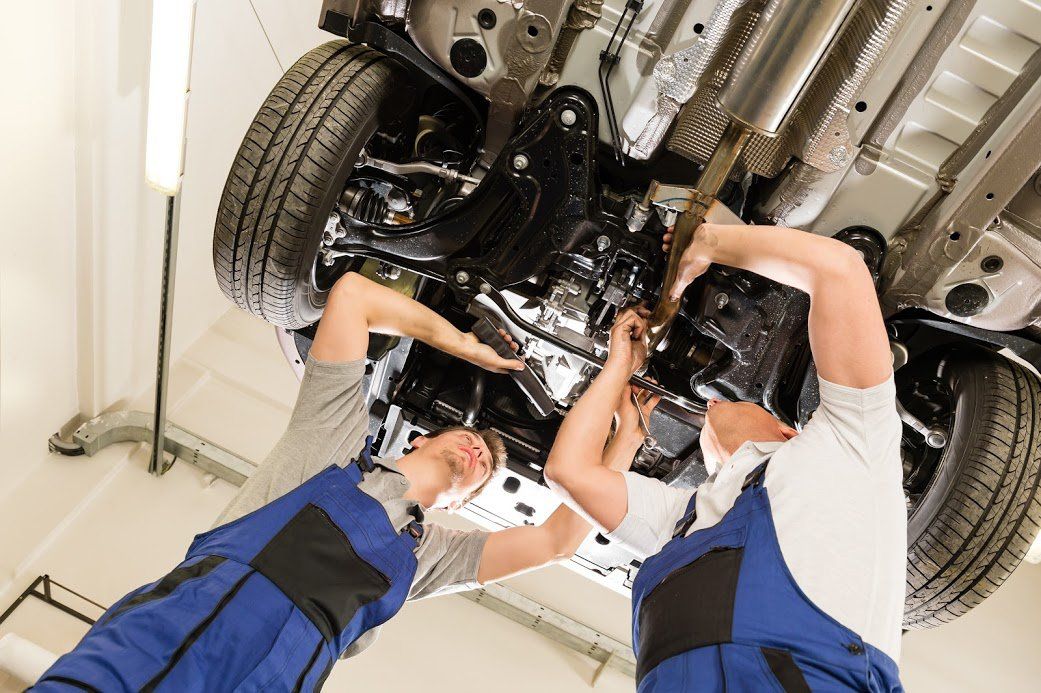
In a service bay on Harbor Avenue, a torn rubber boot on a front axle had a customer asking a familiar question: Why does this car have short shafts up front, while a friend’s rear-wheel-drive truck has a long shaft running down the middle? Mechanics answered the same way they diagnose many noises and leaks—by following the path of power from the engine to the pavement.
A beginner can get lost in acronyms, but technicians say most passenger cars in town fit into two common layouts: front-wheel drive with a transverse engine, and rear-wheel drive with a longitudinal engine. The names describe where the engine sits and which wheels get the job of moving the car.
At Harbor City Auto Clinic, shop foreman Darnell Price said he starts new apprentices with a simple exercise.
“Don’t start with physics,” Price said, pointing under a compact hatchback on a lift. “Start with connections. What bolts to what? What spins what? Once you can walk the path, the rest makes sense.”
Layout 1: FWD with a transverse engine (sideways engine)
On most modern compact and midsize cars, the engine sits sideways in the engine bay, and most of the drivetrain is clustered up front.
Simple component map (FWD transverse):
- Engine (front, sideways) → Clutch (manual) or torque converter (automatic) → Transaxle → Differential (inside the transaxle) → Left CV axle/half-shaft and Right CV axle/half-shaft → Front wheel hubs
Mechanics often call the big assembly a transaxle because it combines parts that are separate on many rear-wheel-drive vehicles.
“It’s the gearbox and the final-drive guts living in the same housing,” Price said, tapping the aluminum case. “Your differential is right here with the transmission, up front.”
In this layout:
- What’s combined: The transmission and the final drive/differential are typically packaged together as a transaxle.
- Where the differential sits: Usually inside the transaxle housing near the front of the vehicle.
- How the shafts work: Power leaves the differential through two short half-shafts—often called CV axles—one to each front wheel.
Because the front wheels steer and move up and down with the suspension, those half-shafts use constant-velocity (CV) joints at the ends.
“If you see a ripped boot, it’s usually at a CV joint,” Price said. “Grease gets out, grit gets in, and then you get that clicking on turns.”
Layout 2: RWD with a longitudinal engine (front-to-back engine)
In many pickups, body-on-frame SUVs, and some performance sedans, the engine sits lengthwise. Power is sent to the rear axle through a long shaft.
Simple component map (RWD longitudinal):
- Engine (front, lengthwise) → Clutch (manual) or torque converter (automatic) → Transmission → Driveshaft → Rear differential (in the rear axle housing) → Rear axle shafts (half-shafts inside the axle) → Rear wheel hubs
At South Pier Motors, technician Lila Chen said the biggest visual giveaway is the driveshaft.
“You can point right down the centerline and say, ‘That’s the link between the transmission and the rear axle,’” Chen said. “Then you get to the rear differential, and from there it splits left and right to the rear wheels.”
In this layout:
- What’s separate: The transmission sits up front, while the differential/final drive is a separate unit in the rear.
- Where the differential sits: In the rear axle assembly, often called the rear end.
- How the shafts work: The driveshaft carries power from front to rear; then axle shafts carry it from the differential out to each rear wheel.
Chen said beginners often mix up axle shafts and a driveshaft.
“The driveshaft is the long messenger between transmission and rear diff,” she said. “The axle shafts are the short deliveries from the diff to the wheels.”
Half-shafts vs. driveshafts: what they do in plain shop terms
In conversations around lifts and alignment racks, the distinction is practical.
- A driveshaft typically means the long shaft that connects the transmission (or transfer case) to a differential located elsewhere.
- A half-shaft (often a CV axle in FWD cars) typically means the short shaft that connects a differential to a wheel.
Price added that some vehicles blur the lines—especially all-wheel-drive crossovers—but the “connects-to-what” method still holds.
Walk the path: three common examples
Mechanics said the fastest way to learn is to pick a real vehicle and trace the parts in order.
Example 1: A 2012 compact FWD sedan (transverse)
In the clinic’s waiting area, customer receipts showed a familiar mix: oil changes, brake pads, and a CV axle replacement on a 2012 compact sedan.
Price described the power path as he would for a newcomer watching a repair video:
- Engine spins → automatic’s torque converter sends rotation into the transaxle → gears change speed/torque inside the same case → differential inside the transaxle splits left/right → two CV axles carry power to the front wheels.
“What surprises people is there’s no long shaft to the back,” Price said. “Everything is right here up front.”
Example 2: A rear-wheel-drive pickup used for towing
At a nearby marina lot, a fleet pickup came in with a vibration complaint at highway speed.
Chen traced the path like a checklist:
- Engine spins → transmission outputs to a driveshaft → driveshaft turns the rear differential → differential drives axle shafts to the rear wheels.
“That vibration? A lot of the time you inspect the driveshaft joints and balance because it’s a long spinning piece,” Chen said.
She added that the rear differential is also where many towing-related service stories begin.
“If the fluid isn’t changed, the rear end can get noisy,” she said. “And that noise is downstream of the driveshaft—right at the differential.”
Example 3: A classic-style performance coupe (RWD, longitudinal)
At a weekend cruise-in, a performance coupe drew a small crowd when its owner opened the hood. The engine sat lengthwise, leaving room for a straight shot back.
A local enthusiast, Miguel Rojas, explained it to a teenager filming for social media.
“Motor to transmission up front,” Rojas said, pointing beneath the car. “Then that tube in the middle is your driveshaft. Then the pumpkin in back is the diff. That’s where it splits power to both rear wheels.”
Rojas said he learned the hard way that each component has its own job.
“If the clutch slips, it’s upstream,” he said. “If you hear a whine that changes with speed, you start thinking diff. You follow the path.”
Vocabulary you’ll see on repair videos
Transaxle: A single housing that combines the transmission and the final drive/differential, common in front-wheel-drive cars.
CV axle (CV half-shaft): A short axle shaft with constant-velocity joints (and rubber boots) that carries power from the differential to a wheel while allowing steering and suspension movement.
Final drive: The last gear reduction before the wheels; often refers to the ring-and-pinion gearing in or near the differential.
The takeaway mechanics want beginners to remember
Price said most first-time learners don’t need equations to start.
“If you can name the parts in order—engine, gearbox, differential, shafts, wheels—you can ask better questions and spot what doesn’t belong,” he said. “That’s how you learn fast, whether you’re under a compact FWD car or a rear-drive truck.”
Chen agreed, adding that the layouts shape what owners tend to see on estimates.
“On a FWD car, you hear about CV axles and transaxle leaks,” she said. “On a RWD truck, you hear about driveshaft joints and rear diff service. Different paths, different problems.”