
The Ridgeway Ledger
Four Ways to Solve One Problem: How Today’s Transmissions Choose the Right Ratio
From a driver’s clutch pedal to computer-swapped clutches and belt-driven pulleys, engineers keep chasing the same goal: keep an engine in its sweet spot while moving a car smoothly and efficiently.
AUTOMOTIVE
DETROIT — Tuesday, January 7, 2026
By Marisol Bennett
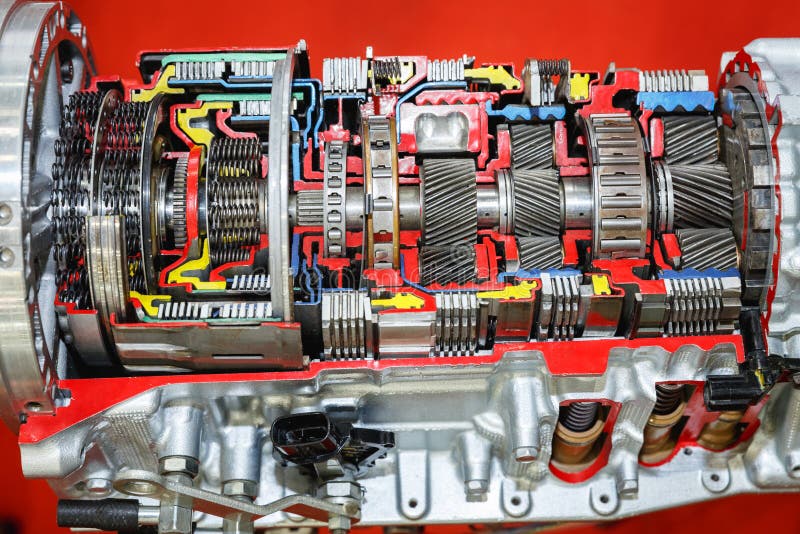
At the North River Auto Lab, a group of engineering students gathered around a cutaway gearbox and a laptop full of data last week, listening as their instructor posed a simple question: How do you keep an engine happy while a car speeds up, slows down, climbs hills and idles in traffic? The answers, he told them, look different — manual, automatic, dual-clutch and continuously variable — but they are all solutions to the same problem: choosing the right ratio at the right time without wasting fuel, creating too much pollution or annoying the person behind the wheel.
Drivers often talk about transmissions the way they talk about coffee — strong opinions, personal routines and a favorite that “just feels right.” But in a lesson that doubled as an explainer for visiting high schoolers, lab instructor Evan Kline kept returning to the same idea: the engine makes power best in a certain range, and the transmission’s job is to connect that power to the wheels while changing leverage.
“Everything we’re about to look at is basically a different method of swapping ratios and managing engagement,” Kline said, tapping the clear plastic housing around a set of gears. “If you understand those two parts, the rest is just consequences — feel, efficiency, cost, comfort.”
The common problem: ratios and engagement
A gasoline engine can’t simply deliver perfect torque at every speed. It needs help multiplying force when the car starts moving and reducing engine strain at highway speeds. That’s the “ratio” part.
The second part is “engagement” — how the drivetrain connects and disconnects smoothly so the engine can keep running while the wheels stop, and so shifts don’t feel like a hammer blow.
“Pick your method of changing ratios, pick your method of engagement, and you’ve basically designed a transmission family,” Kline told the group.
Manual: the driver picks the ratios and manages engagement
How it changes ratios: A manual transmission uses fixed gear pairs. The driver selects one gear at a time using a shift lever, which moves collars or synchronizers to lock a chosen gear to the output shaft.
How it manages engagement: A friction clutch, controlled by a pedal, disconnects the engine from the transmission so the driver can change gears and then re-engage smoothly.
Typical driving feel: Manuals are often described as direct and predictable. The car responds to deliberate inputs: clutch in, select gear, clutch out. When done well, shifts feel mechanical and connected; when done poorly, there can be a lurch.
At the lab, student Priya Desai demonstrated a smooth start on a training rig, feathering the clutch while the engine note rose.
“You can feel where it grabs,” she said. “It’s like you’re negotiating with the car.”
Why manufacturers choose it: In some markets, manuals remain appealing for cost and simplicity, and in certain small vehicles they can still be efficient. But Kline noted that modern emissions targets and consumer expectations have narrowed the manual’s footprint.
“Consistency matters,” he said. “A computer can hit the same shift points every time. A human is… beautifully variable.”
Traditional automatic: the transmission picks ratios, the torque converter smooths it
How it changes ratios: Most conventional automatics use planetary gear sets, which can create multiple fixed ratios by holding and releasing different elements with clutches and bands. The transmission control computer decides when to shift.
How it manages engagement: A torque converter — a fluid coupling — sits between the engine and the transmission. It allows the car to stop while the engine idles and helps smooth initial acceleration. Many modern units also use a lockup clutch to reduce slip at cruising speeds.
Typical driving feel: Automatics are typically tuned for smoothness. Drivers often perceive shifts as subtle, or as a gentle “step” from one ratio to the next. The torque converter can make low-speed creeping easy in traffic.
“Comfort is the product here,” said Lydia Monroe, a calibrations engineer who spoke during the visit. “If a customer feels a harsh shift in a test drive, they may never learn why it happened. They just don’t buy the car.”
Why manufacturers choose it: Automatics are common because they suit a broad range of drivers and can be refined for quiet, comfortable operation. Manufacturers also choose them because modern multi-speed designs can keep engines operating efficiently, helping with fuel economy and emissions compliance.
Dual-clutch transmission (DCT): computer-shifted gears with two clutches
How it changes ratios: A DCT uses fixed gears like a manual, but it pre-selects the next gear. Internally, one clutch handles odd-numbered gears and the other handles even-numbered gears. While one gear is driving, the next can be ready on the other shaft.
How it manages engagement: Instead of one clutch pedal, a DCT has two clutches controlled by actuators and software. During a shift, one clutch opens while the other closes, handing off torque quickly.
Typical driving feel: DCTs are often known for quick, crisp shifts, especially under acceleration. In some low-speed situations — parking lots, stop-and-go traffic — certain calibrations can feel abrupt or hesitant as the system carefully engages clutches to avoid slip and heat.
Monroe described it as a balancing act. “You’re chasing that fast, clean shift without making it unpleasant at five miles an hour,” she said.
Why manufacturers choose it: DCTs can offer strong efficiency because they avoid some of the energy losses associated with fluid coupling, and they can keep engines closer to optimal operating ranges. They’re also attractive for performance branding because of rapid shift capability. The tradeoffs often involve cost, complexity and the challenge of smoothness at very low speeds.
Continuously variable transmission (CVT): ratios slide instead of stepping
How it changes ratios: A CVT typically uses a pair of variable-diameter pulleys connected by a metal belt or chain. By changing pulley widths, the system changes the effective diameter — and therefore the ratio — continuously rather than in fixed steps.
How it manages engagement: Many CVTs use a torque converter or a start clutch to get the vehicle moving from a stop. Once underway, the belt-and-pulley system adjusts ratios smoothly.
Typical driving feel: CVTs can feel different because the engine speed may hold steady while the car accelerates, rather than rising and falling through distinct gear changes. Some drivers describe it as a “rubber-band” sensation; manufacturers sometimes program simulated shift points to make the experience feel more familiar.
Kline played a recorded data trace showing engine speed staying nearly flat while road speed climbed. A few students laughed at the sound clip that accompanied it.
“It’s not wrong,” he said. “It’s just optimized differently.”
Why manufacturers choose it: CVTs are frequently selected for efficiency and emissions performance because they can keep the engine near its most efficient operating speed more often. They can also be cost-effective in certain vehicle classes. Their drawbacks can include driver perception, noise under hard acceleration and durability concerns depending on design and use.
Why the choices keep multiplying
In the lab’s final discussion, the group compared notes: the manual’s driver-controlled engagement, the automatic’s smooth creep, the DCT’s fast handoffs, the CVT’s continuous adjustment.
Kline asked the students to imagine the same compact crossover sold in four versions, each with a different transmission.
“One customer wants a low price and doesn’t mind learning,” he said. “Another wants comfort in traffic. Another wants quick response on a highway on-ramp. Another wants the best possible fuel number on the window sticker. The powertrain team is solving one problem, but the product team is solving many.”
Monroe said the decision often comes down to what a manufacturer can build reliably at scale while meeting ever-tightening emissions rules.
“Efficiency isn’t a single number,” she said. “It’s fuel, it’s emissions, it’s how the engine behaves, and it’s how drivers behave. The transmission is where those realities meet.”
As the tour ended, the students drifted back toward the cutaway gearbox, taking turns moving a shift fork by hand. Kline watched them, then gestured toward the other display: a pulley set and a belt looped around it.
“Different solutions,” he said, “same problem.”