
The Lakehurst Sentinel
Inspection Backlog Exposes Emissions Blind Spots; Shop Teaches Drivers What Their Exhaust Sensors Are Saying
A surge in failed smog tests sends motorists to local garages, where mechanics point to catalytic converters and oxygen sensors — and to the moment cars switch into “closed-loop” control.
TRANSPORTATION & ENVIRONMENT
LAKEHURST, Ore. — Tuesday, Jan. 7, 2026
By Mariah Benton
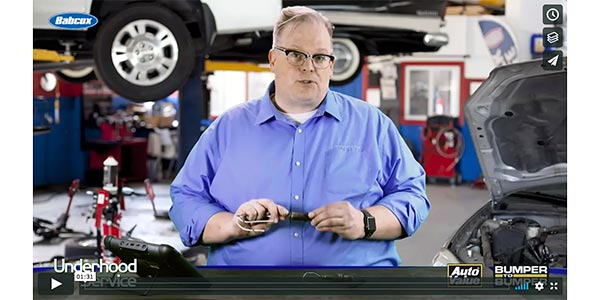
A line of idling sedans and pickup trucks wrapped around Lakehurst Auto & Tire before sunrise Tuesday, a spillover from the county’s first week of expanded emissions testing and a wave of dashboard warning lights that drivers said they had ignored until they couldn’t renew registrations.
The most common culprit, shop owner Rafael Ibarra said, wasn’t a single brand or model year, but a pattern: “People think the exhaust is just a pipe,” he told customers gathered near a cutaway display on the counter. “It’s a control system. When one part stops talking, the car starts guessing.”
County officials said the new testing lanes were added after summer ozone readings repeatedly exceeded state targets. The tighter inspection rules did not invent new problems, inspectors said; they surfaced old ones.
A converter that “finishes the job”
On a rolling cart, Ibarra kept a honeycomb-like cylinder nicknamed “the brick,” a retired catalytic converter sliced open for show. He shook it gently, and the rattle drew a few winces.
“When this breaks down or gets clogged, you don’t just get a smell,” he said. “You get higher tailpipe numbers, and sometimes a hotter exhaust that can damage the rest of the system.”
Ibarra avoided chemistry talk, but he described what the device is meant to do in plain shop terms: take the leftover pollutants an engine can’t avoid making during normal driving and “clean them up on the way out.”
“It’s not there for horsepower,” he said. “It’s there so the bad stuff — the ones that make eyes burn and give you that headache behind traffic — gets knocked down before it hits the street.”
State environmental engineer Lila Novak, who visited the shop as part of an outreach effort, said the converter’s role becomes obvious when it’s missing.
“You can see it on the printout,” Novak said, holding a failed test report that flagged elevated carbon monoxide and hydrocarbons. “The engine may be running, but the last line of defense is gone.”
Two sensors, two questions
The day’s main lesson came from two small parts screwed into a section of exhaust pipe on the display wall — upstream and downstream oxygen sensors — and from how their readings changed on a scan tool as a customer’s SUV warmed up.
“The one before the converter is the bossy one,” technician Alana Cho told a group of waiting drivers, pointing to the upstream sensor location near the engine. “It’s the car’s way of checking whether it’s running rich or lean, and it nudges fuel delivery back and forth.”
Cho tapped the downstream sensor position after the converter. “This one is the hall monitor,” she said. “It’s not really trying to tune the engine moment-to-moment. It’s checking whether the converter did what it was supposed to do.”
Several customers said they had assumed any oxygen sensor was interchangeable. Cho said the parts might look similar, but the computer treats them differently.
“When the rear sensor looks too much like the front sensor, the car thinks the converter isn’t cleaning anything,” she said. “That’s when you get the catalyst efficiency code and the ‘check engine’ light that won’t go away.”
What “closed-loop” looks like on a screen
A county inspector, invited to speak briefly, described the testing lane’s newer requirement: connecting to a vehicle’s diagnostic port to confirm the computer has run its self-checks.
“That’s where closed-loop matters,” inspector Mark Ellery said. “If the car never gets into closed-loop, it may run fine to you, but it hasn’t proven it can control emissions the way it was designed.”
In the shop bay, Cho demonstrated with a scan tool as a compact car’s engine temperature climbed.
“Open-loop is the warm-up phase,” she said as the display showed the system status. “The computer is using pre-set fueling because the sensors aren’t ready to be trusted yet.”
When the screen flipped to “closed-loop,” Cho pointed at the rapidly changing numbers.
“Now it’s listening,” she said. “It’s adjusting in real time based on what the upstream sensor reports. If there’s an exhaust leak, a lazy sensor, or a fueling problem, you see the corrections start going extreme. That’s when the tailpipe numbers go bad.”
Ibarra handed out a one-page diagram he said he wished every driver could see before the first warning light.
Engine → Exhaust → Catalyst → Tailpipe
   ↑                     ↓
   └── O2 sensor feedback → ECU
      (upstream tunes)   (downstream monitors)
Old cars, new rules
Several drivers asked why their older vehicles seemed to “fail more suddenly” than newer ones.
Novak said earlier systems often lacked converters or used less sophisticated feedback. “Many older designs had limited sensing and fewer self-checks,” she said. “You could be out of tune and not know it until you smelled it or saw smoke.”
By contrast, modern vehicles are built around on-board diagnostics, she said, which continually watch the converter and sensors and set readiness monitors that the state now verifies.
“The car is basically auditing itself,” Novak said. “That’s why people see a light long before they notice drivability issues — and why clearing codes right before inspection doesn’t work. The system has to run and pass its own tests.”
Ellery said the inspection lanes have already seen vehicles arrive with recently disconnected batteries or freshly cleared codes. “They’re not ‘ready,’” he said. “The computer hasn’t collected enough proof yet.”
Costs, choices, and consequences
For customers in line, the new process has meant tough decisions.
“I thought it was just a sensor,” said local delivery driver Jenna Park, whose 2012 hatchback failed for catalyst efficiency. “Then they explained the rear sensor is only reporting the converter’s work. If the converter is actually tired, a sensor won’t fix it.”
Ibarra said he’s seeing more vehicles with damaged converters after months of misfires or oil burning. “If the engine is dumping raw fuel into the exhaust, the converter pays the price,” he said. “People try to save money by waiting, but the wait can turn a 2,000 one.”
County officials said they expect the backlog to ease within weeks as more testing appointments open, but Novak said the bigger goal is longer-term.
“The point isn’t to punish drivers,” she said. “It’s to get the fleet back to the controls it was designed to use — sensors talking to the computer, the converter doing its job — so what comes out of the tailpipe is measurably cleaner.”
Ibarra, watching another customer pull into Bay 2, summed up the day’s message in shop-language.
“Engines don’t run perfectly on their own,” he said. “They run well because the computer closes the loop — and because the exhaust system isn’t just dumping fumes. It’s part of the fix.”