
The Harbor City Sentinel
High School’s ‘Cell Cycle Week’ Turns DNA Copying Into a Public Lesson on Timing
A local biology lab’s open house and a district curriculum pilot spotlight how chromosomes become sister chromatids — and why cyclins and CDKs act like scheduled permission slips for growth.
SCIENCE & EDUCATION
HARBOR CITY — Tuesday, January 28, 2026
By Marisol Vega
In a classroom lit by microscopes and a looping animation of dividing cells, Harbor City Unified’s first “Cell Cycle Week” drew students, parents and even a few city council members to a lesson teachers said is less about memorizing phases and more about understanding why order matters when life copies itself.
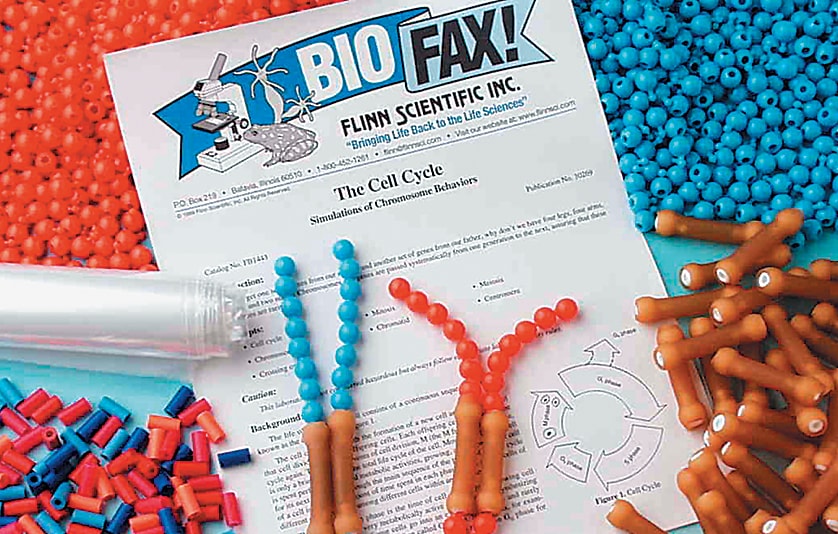
The event, hosted Monday at Windlass High School with help from the Shoreline Biomedical Institute, was part demonstration, part community open house. On one table, students handled color-coded “chromosome kits” — paired ribbons clipped to a bead “centromere” — while on another, volunteers timed a relay that was allowed to continue only when an instructor handed them a stamped card.
“That stamp is the whole point,” said AP Biology teacher Denise Holloway, watching a group of sophomores pause at a taped line labeled S until the next card arrived. “You can have all the pieces ready, but you don’t get to move forward until the schedule says you can.”
From one chromosome to two sister chromatids
At the center of the district’s pilot lesson is a basic claim Holloway said students often miss: during S phase, a chromosome does not merely “gain more DNA” — it becomes a duplicated structure with two identical DNA copies that remain physically linked.
In the demonstration, students began with a single ribbon labeled “Chromosome 7.” When the “S phase” bell rang, they used a matching ribbon to create a paired set. The two ribbons were clipped together at a shared bead.
“That clip is our stand-in for what keeps the duplicates together,” said Shoreline institute educator Dr. Ajay Bhandari, who helped design the activity. “After S phase, you don’t have two independent chromosomes wandering off. You have sister chromatids — two copies made from one original — held as a unit until it’s time to separate them during division.”
The distinction, Bhandari said, is why cells can copy the genome and still keep the duplicates organized long enough to pass one copy to each daughter cell later.
Student volunteers took turns narrating the moment the “one ribbon becomes two” in front of parents.
“It’s like photocopying a document and keeping the original and the copy stapled together until you’re ready to hand them to two people,” said junior Lila Moreno, who later said the metaphor made it easier to understand why the cell doesn’t immediately “double” its chromosome count in the way people imagine.
Cyclins and CDKs as timed permission signals
On a whiteboard, Holloway avoided chemical pathways and drew instead what she called a “permission calendar.” The class labeled certain time windows with names: G1 cyclin/CDK, S cyclin/CDK, G2 cyclin/CDK, and M cyclin/CDK.
Her rule for the day: no group could cross from one tape-marked phase to the next without receiving the correct permission card.
“The cards are cyclins,” she told them. “The stamp is the CDK being active. Together they function like permission signals — temporary, timed, and specific to the step.”
In the relay, some groups tried to sprint ahead.
“They’re always trying to skip G1,” Holloway said, laughing as she stopped a team at the first line. “But the lesson is that permission is not just ‘go.’ It’s ‘go now, and go in this order.’”
Bhandari said the image of a permission signal fits how the district wants to present cell-cycle control to beginners: cyclins rise and fall like scheduled passes, and CDKs are the machinery that responds when the pass is present.
“When the pass isn’t there, the machinery can’t run that step,” he said. “And when the pass disappears, the cell shouldn’t linger in a state that invites mistakes.”
A timeline students can point to
At the end of the open house, the teachers handed out a one-page timeline that students could annotate in their notebooks. It was intentionally plain, Holloway said, to keep the focus on sequence.
Annotated timeline (conceptual activity only):
-
G1 (growth & checks)
Cyclin/CDK permission: low → rising (a “prepare” pass appears)
What students wrote: Cell builds materials, decides whether conditions are OK to copy DNA. -
S (DNA synthesis)
Cyclin/CDK permission: high (S-pass on) then falls when copying is done
What students wrote: Each chromosome is duplicated into two sister chromatids held together. -
G2 (prep for division)
Cyclin/CDK permission: rising again (a “ready-to-divide” pass accumulates)
What students wrote: Cell checks that copying finished and prepares division machinery. -
M (mitosis/cell division)
Cyclin/CDK permission: peaks to start division, then drops sharply to end it
What students wrote: Sister chromatids separate so each new cell gets one complete set.
“Students like seeing something go up and down,” said assistant principal Carla Nguyen, who is overseeing the curriculum pilot. “They stop thinking the phases are just four vocabulary words and start seeing them as gates.”
Why timing and order show up in heredity — and in growth
In a panel discussion, speakers tied the classroom relay to consequences beyond the lab table.
“If sister chromatids don’t stay paired until the right moment, you can misplace genetic information,” Bhandari told attendees. “And if permission signals arrive too early, too late, or not at all, the cell can copy at the wrong time or divide before it’s ready.”
Nguyen said that framing helps students connect the cell cycle to two ideas they encounter elsewhere in biology: heredity and growth.
“Heredity is about passing information forward with fidelity,” she said. “Growth is about making more cells on schedule, in a controlled way, to build and maintain tissues. Both depend on the cell doing the steps in the right order.”
Parents asked whether the district was drifting into medical topics.
Holloway said the goal was narrower: to make the logic of replication and division intelligible.
“When a student says, ‘Oh — the cell doesn’t just copy DNA, it organizes the copies and waits for permission to split them,’ that’s a durable understanding,” she said. “They can carry that into genetics, development, and anything else we teach later.”
The district plans to expand the pilot lesson to two more high schools in the spring. For Moreno, the junior, the takeaway was simpler.
“It’s the waiting that makes it work,” she said, pointing to the taped lines on the floor. “You don’t move just because you want to. You move because it’s time — and because the copies are actually ready.”